|
cyberbarf VOLUME 24 No 10 EXAMINE THE NET WAY OF LIFE MAY, 2026
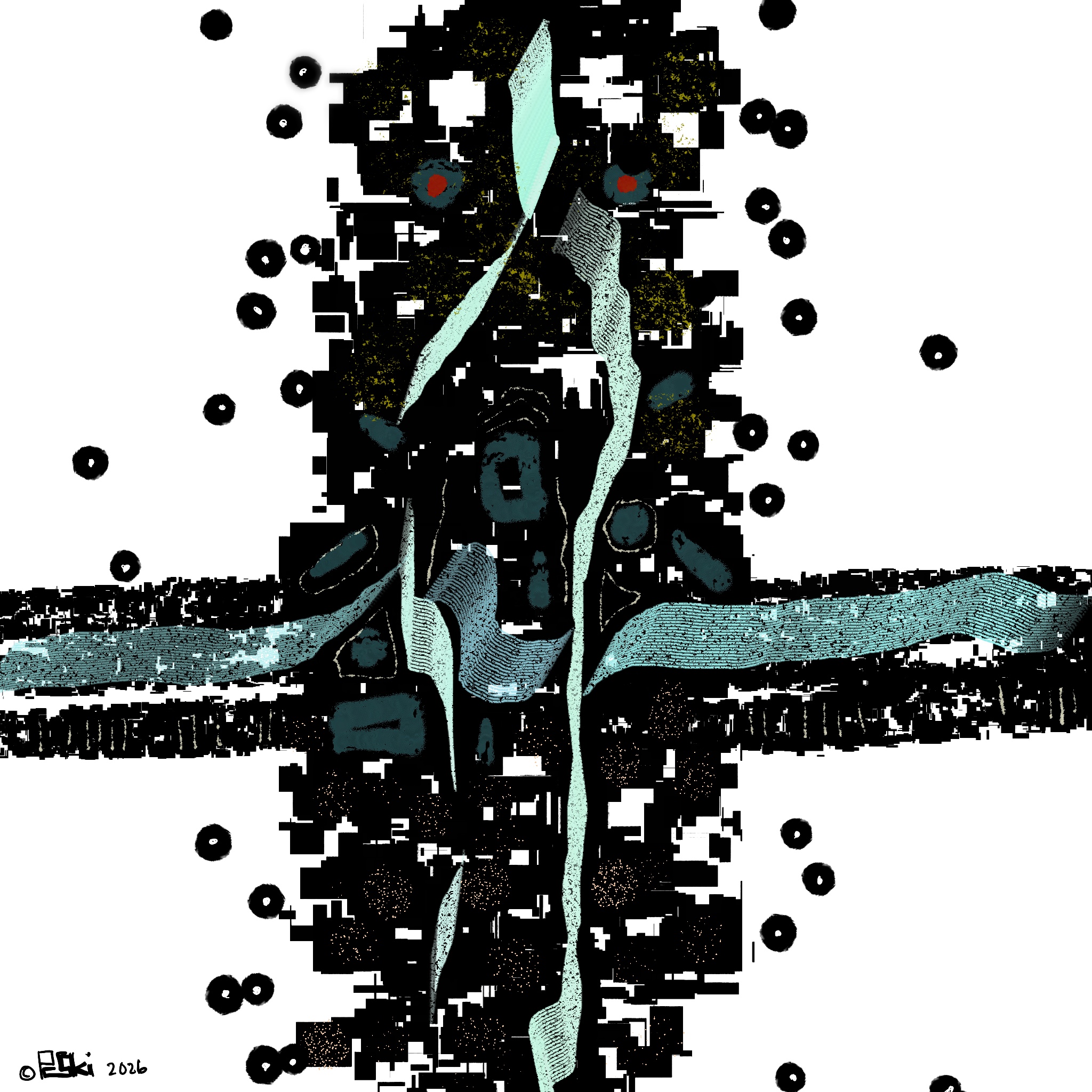
Digital Illustration "Modern Technology" ©2026 Ski cyberbarf MAY, 2026 TIPSY SEARCH FOR THE CRYPTO KING iTOONS SWAPS AND GAMBLING FOUND BUT NOT LOST ON THE INTERNET QUICK BYTES WHETHER REPORT
©2026 Ski Words, Cartoons & Illustrations All Rights Reserved Worldwide Distributed by pindermedia.com, inc
cyberculture, commentary, cartoons, essays
|
|
cyberbarf TIPSY VIRAL STORY Travel documentary series, “Tip to Tip,” stars streamers Ludwig Ahgren and Michael Reeves. They attempt to cross China on motorcycles without using highways, translators, maps, cell phone navigation and minimal language skills. The challenge was to start in southern China and ride to the Mongolian border. Last year, the duo conquered traveling the length of Japan. The duo has many constraints to overcome. First, motorcycles are not allowed in big cities. Second, motorcycles are not allowed on expressways which means they must take rural roads or local highways. Third, the route will be mostly through rural areas of central China. Fourth, the language barrier will be fraught with mistakes as China has dozens of dialects, Fifth, the weather will not be their friend. But with Lugwig's confidence and Michael's humor, the two ride off a small island into an adventure. It becomes clear to viewers (and Chinese reactors to the episodes) that the Americans do not grasp the rhythms of the native language's up and down syllable tones. When they ask for a hotel, the locals hear pig shop. But someone, they manage to figure things our or the locals begin to understand them. One of the biggest takeaways for this challenge series was that the rural Chinese people they met were very nice and supportive. In fact, most of them had never seen a foreigner before they arrived in their village. In 2026 , that is a pretty shocking revelation. The two learned quickly to approach men for directions by offering a cigarette. It is a custom. And once they get them engaged in what could be loosely called a conversation, many laugh at their odd word choices. Early on, everyone tells them to use their phones to navigate. But they do not since their phones are bricked. They get into a routine of going to gas stations to get directions. Since an attendant must pump the gas, they are easy targets. A few stay silent, a few are helpful and few have no idea where they are heading. When they get some golden information, that the best north route is Highway 207, that road becomes their travel mistress. They ride her until they get lost. They regain her only to lose her again. It is like a c-drama. Because they are the first Americans ever visiting small towns, the locals want to take pictures with them. Young children want to interact with them, practice their small English skills, or see if they are famous. When a few learn that they are US MMO game players, they begin to search their videos on the internet. Later, these trip videos go viral on Bilibili, the Chinese YouTube. Chinese nationals are reacting and commenting on their trip in real time. The duo stumble into a small village looking for food at a festive gathering. But they do not realize that they were crashing in on a funeral. But the local businessman boss, Mr. Lee, takes them to his very nice home, feeds them, and they become instant friends. They video chat on on a couple later days because he is concerned about their condition. He is right because the two have highs and lows on the trip: visiting hot springs to having serious food poisoning. In the end, they complete their mission in 16 days, reaching an inner Mongolian town known for kissing dinosaurs. Yes, there are weird roadside oddities in China as much as there is on Route 66 in the US. We highly recommend that you use your Internet video hours watching their travel vlogs. It gives you some hope for the future. There is an old saying in political circles:countries through government leaders may be at odds with other nations, but the people of those nations are not in conflict. As China and the US grapple with tariffs, trade wars and actual wars across the globe, none of that changed the interactions between the American riders and the local Chinese people. The lesson is that people on the other side of the globe are just as nice, helpful and caring as your own next door neighbors. cyberbarf SEARCH FOR THE CRYPTO KING MYSTERY A New York Times reporter claims he has cracked one of technology;s biggest mysteries by unearthing the real identity of Bitcoin's elusive founder Satoshi Nakamoto, but the man he fingered flatly denies it. Times journalist John Carreyrou named Adam Back, a 55-year-old British computer scientist and cryptographer, as the real Nakamoto, prompting Back to renew his denials that that he is the Bitcoin creator. He admits that he was early in laser focus on the positive societal implications of cryptography, online privacy and electronic cash. Back was an original suspect when Bitcoin burst on the scene and the tech world wanted to know its inventor. Carreyrou, the former Wall Street Journal reporter who first exposed the Theranos scandal, wrote that he spent more than a year combing through thousands of archived emails, forum posts and early Internet records in an effort to identify Nakamoto. He wrote that emails and posts attributed to Nakamoto used British expressions and spellings, a pattern that suggested a UK-based author like Back. Carreyrou pointed to a series of other clues linking Back to the Bitcoin creator, including his invention of Hashcash, a precursor cited in the original Bitcoin white paper. People want to know who invented Bitcoin (Satoshi Nakamoto) to solve one of the greatest mysteries in modern technology, understand the creator's intent, and assess risks, as that person potentially holds over 1 million BTC (worth billions). Identifying them could impact market stability and reveal if Bitcoin is truly decentralized or tied to one person as Medium wrote last year: The true identity of Bitcoin's founder or creator remains a compelling mystery. All we know is that the name Satoshi Nakamoto is most likely a pseudonym and not a real name. Otherwise, the Bitcoin creator would no longer be in the shadows but the limelight given its amazing performance as an asset. Is it still relevant to know who the real Satoshi is or is this considered a thing of the past? The Bitcoin community has grown since Satoshi released the 2008 white paper. Even though we do not know Satosh's true identity, some have come forward to make claims while others have been suggested. The plot always thickens when there is any new information that might be worth reading about. First of all, we do not know if Satoshi is dead or alive. We also do not know if Satoshi is a man, woman, group, organization, AI robot, state or a psyop. Maybe there is a reason why Satoshi has remained anonymous, including personal security or whether governments would charge him with some kind of criminal conduct. Humans are curious by nature. We love mysteries. We want closure. Did cryptocurrency change the world? Yes, in the financial markets sense as sovereign nations no longer control the printing of money. But also No, because this is still a flash point that Luddites find troublesome during a wave of anti-technology (including AI) sentiment.
iToons
cyberbarf SWAPS AND GAMBLING NEWS A federal appeals court ruled that New Jersey cannot regulate sports bets on prediction markets because the US Commodity Futures Trading Commission (CFTC) has exclusive jurisdiction. Kalshi, which is registered with the CFTC as a designated contract market (DCM) last year won a preliminary injunction preventing the New Jersey Division of Gaming Enforcement from enforcing a state law against its sports-related event contracts. The injunction issued by a district court was upheld in a 2-1 decision by judges at the US Court of Appeals for the 3rd Circuit, Ars Technica reported. The CFTC has exclusive jurisdiction over DCMs under the federal Commodity Exchange Act. The question in the Kalshi lawsuit is whether the CFTC's exclusive jurisdiction preempts New Jersey gambling laws and the state constitution's prohibition on collegiate sports betting as the appeals court majority wrote. “New Jersey frames the issue broadly (regulating all sports gambling) rather than narrowly (regulating trading on federally designated contract markets) the court said,ruling that the federal law overules state laws that directly interfere with swaps traded on DCMs. The average American, sports bettor or financial trader, can see they are the same animal; a black sheep and white sheep. Kalshi's sports-related event contracts are swaps traded on a CFT-licensed DCM. In finance, a swap is a derivative in which two parties agree to exchange one stream of cash flows for another, based on some agreed formula. An example is a floating-for-fixed interest rate swap, which calls for (a) payments by one party based on the product of a floating interest rate and a fixed amount, called the notional, in exchange for (b) payments by the counterparty based on the product of a fixed interest rate ( ex. 3 percent) and the same notional amount. This example illustrates the origins of the name “swap” because the instrument allows the parties to swap payment obligations based on two interest rates: a floating rate and a fixed rate. Circuit Judge Jane Roth dissented, writing that the Kalshi's offerings are virtually indistinguishable from the betting products available on online sports books, such as DraftKings and FanDuel. Roth recounted looking at the Kalshi page for the Carolina Panthers versus Tampa Bay Buccaneers football game on January 3, 2026, and seeing an extensive list of available bets. Prediction markets, also known as betting markets, information markets, decision markets, idea futures, or event derivatives, are open markets that enable the prediction of specific outcomes using financial incentives (gambling on real world events.) They are exchange-traded markets established for trading bets in the outcome of various events. The market prices can indicate what the crowd (the public) thinks the probability of the event is. A typical prediction market contract is set up to trade between 0 and 100%. The most common form of a prediction market is a binary option market, which will expire at the price of 0 or 100%. Prediction markets can be thought of as belonging to the more general concept of crowdsourcing which is specially designed to aggregate beliefs on particular topics of interest. The main purpose of prediction markets are eliciting aggregating beliefs about an unknown future event. Traders with different beliefs trade on contracts whose payoffs are related to the unknown future outcome and the market prices of the contracts are considered as the aggregated belief. Before the era of scientific polling, early forms of prediction markets often existed in the form of political betting. One such political bet dates back to 1503, in which people bet on who would be the papal successor. Even then, it was already considered “an old practice, ” according to Wikipedia. Prediction markets are based on the theory that individuals with financial stakes in an outcome can collectively predict it more accurately than any single expert. Even if participants are not highly informed, the collective wisdom emerges from their shared incentive to avoid financial loss. But the predictive market can be considered to be prone to malfeasance. NBC News reported that a flurry of bets made prior to major announcements about the Iran war has ramped up speculation that individuals or groups with advance knowledge of U.S. military plans are cashing in on insider information. In late April, a US soldier was arrested for insider trading on confidential military operations. And while prediction market platforms Polymarket and Kalshi now say they are taking more proactive measures designed to prevent such illicit activity, experts say there have been few signs so far that Trump administration regulators are cracking down."You need the deterrent factor that exists on the government side," said Chris Ehrman, an attorney who previously served as head of the Commodity Futures Trading Commission's whistleblower office. Without it, he said, simply allowing the platforms to self-regulate often amounts to whipping them with a wet noodle. So far, the suspect bets have been largely concentrated on Polymarket, a platform that allows users to wager on the likelihood of certain events taking place. But in at least one case, speculation about a possible insider trade has migrated to a more traditional market. Data suggests traders with advanced knowledge of geopolitical events may have collectively pocketed millions from recent bets on Polymarket. Last month, in the run-up to the latest round of American and Israeli attacks on Iran, some $529 million was traded on the platform tied to the timing of the strikes, In April, Bloomberg News reported analytic firm Bubblemaps said a series of connected Polymarket accounts had earned $1 million over the past two years predicting US and Israeli strikes in the Middle East. Approximately 15 minutes before President Donald Trump posted that there had been “productive talks with Iran,” stocks and oil futures trades on the main exchange run by longtime markets firm CME Group saw an unusual burst of volume compared to the relatively subdued backdrop seen the rest of that morning. The bets predicted stocks would rise and oil prices would fall that day, precisely what happened once Trump made his announcement. Depending on when they closed, the trades could have yielded millions. This issue will make its way through the courts. Gambling critics find predictive markets merely Wild West unregulated gambling that has no business purpose that a swap or commodity contract does for buyers and sellers of specific products, whether it be corn prices or interest rates.
cyberbarf FOUND BUT NOT LOST ON THE INTERNET
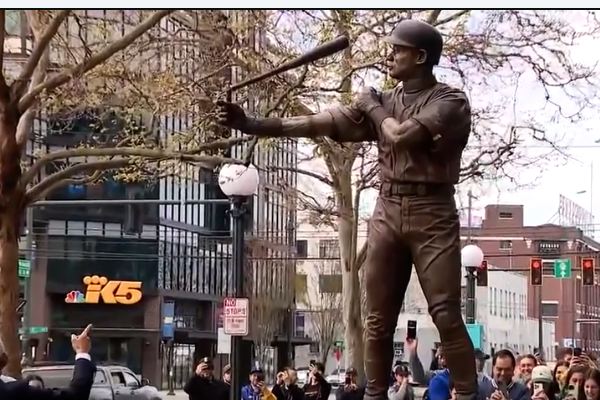
Seattle Mariners were honoring HOF player Ichiro Suzki with a bronze statue. During the unveiling, disaster. Ichiro, one of the great modern baseball hitters, had the bat bend. It is ironic that the team's greatest hitter had a broken bat at his award ceremony. Source: Yahoo Sports
Delivery robots are being deployed across streets and sidewalks. But there have been a few deliveries that wind up smashing into bus stops. Whether the navigation software or video camera cannot tell a glass bus stop is invisible has not been answered. But the real question is whether these low profile vehicles will run into human pedestrians (whether distracted on their phones or otherwise). Source: NY Post
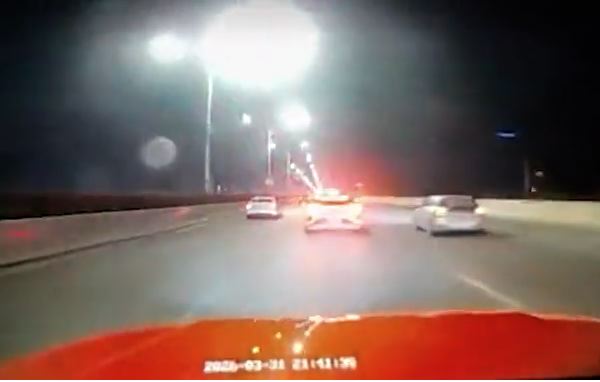
In other robot news, 100 robotaxis suddenly stopped in China. A few stopped dead on high speed expressways, leaving scared passengers at the mercy of other vehicles not slamming into their taxi. It was said it was a nav-sat software problem. But for passengers it was a real horror story. Apparently, there is no manual override in the vehicle to get it off the highway danger zones. Source: Daily Mail (UK)
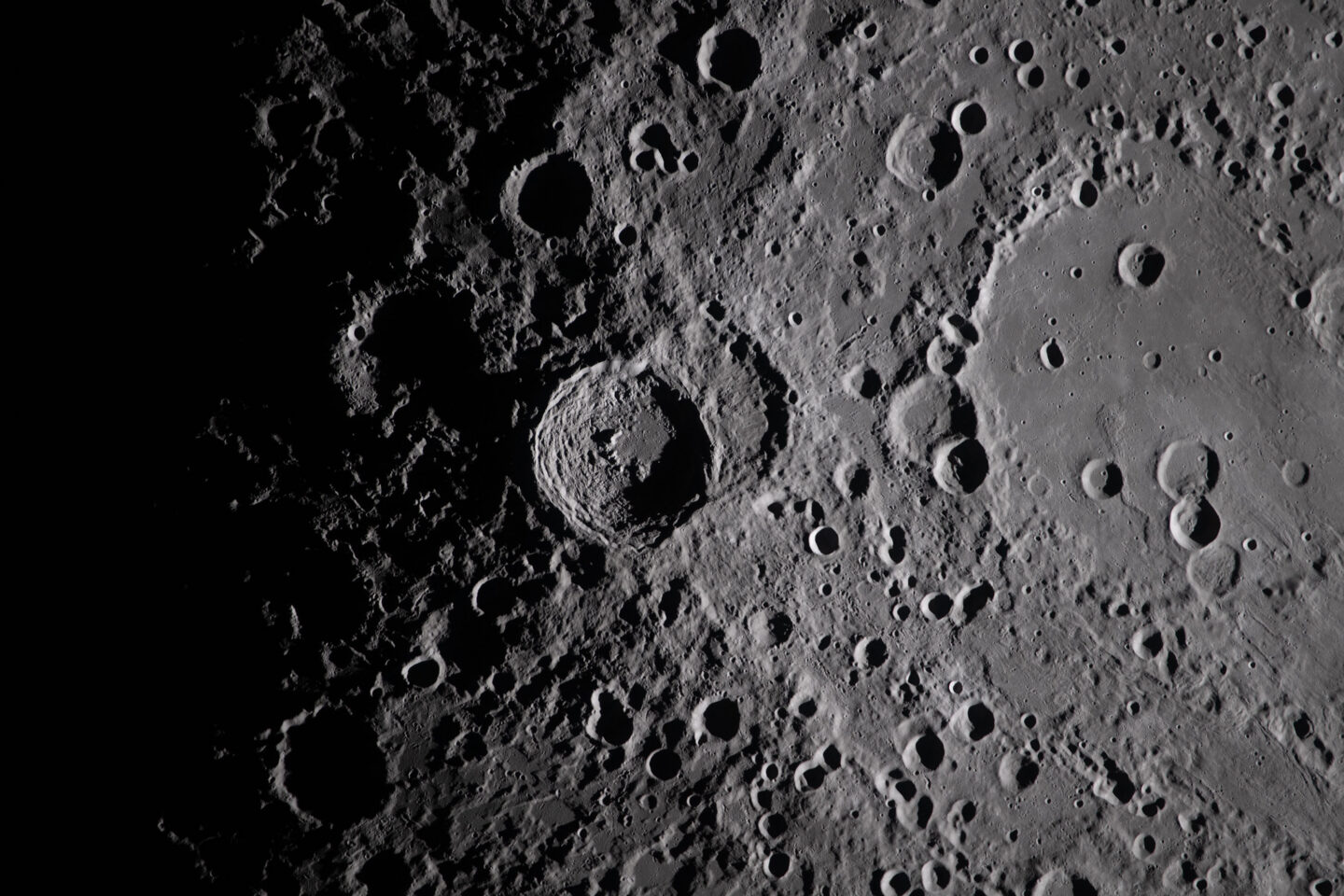
The Dark Side of the Moon is a mystery to most humans. But technically, the moon does rotate and explorers had seen it before this year. But the astronauts' pictures did not show alien space ports or city ruins. It showed the pock marked face of a teenager. For a mission to jump start the US space program, we did not find that it had the buzz of earlier ones. Source: NASA
cyberbarf QUICK BYTES CYBERCULTURE HOUSTON, THEY HAVE A PROBLEM. KBS, the largest public television network in South Korea, was embarrassed by auto-generated live AI translation of the NASA moon mission. During the broadcast, the audio feed was translated into Korean. When mission control said the standard "Roger, roll and pitch" command, Korean viewers heard "Roger, roll, bitch." Whoa. In a very conservative country with strict broadcast standards, this was bad. KBS apologized for the error in the AI-program. But it did not say it would stop using the AI to translate on its programs. CEASE, FIRE! The first US and Iran ceasefire lasted two hours. The CIA called the plan of regime change “farcical.” Secretary of Defense (War) wanted to strike. Benjamin Netanyahu was invited to make his case for war in the Situation Room, The New York Times reported. The rest of Trump's cabinet just followed whatever the President would decide. Only VP Vance made a strong objection, but Trump did not dwell on it. After boasting his victory in Venezuela, Trump may have decided that he could do no wrong. The US went into missile tennis match in an area where the administration had little to gain. Without a Congressional act to allow the action to go on beyond May 2, 2026, Iran can just sit back and make the US look lawless. IRAN WAR'S BIGGEST CASUALTIES. Trump's political strength has always depended less on party institutions than on a decentralized media ecosystem of podcasters, streamers and activists who translate his message to millions of loyal voters. But since the War began, about a dozen of his former strong MAGA supporters have sharply criticized the president and his actions. The criticisms documented above are almost entirely from MAGA's elite influencer class, people with large platforms and strong opinions. The Trump empire builders seem to have walked off the work sites. Or rats fleeing a sinking ship. NOT JUST 404. The latest version of Google's AI was tested to see its accuracy. It was found that it got the correct answer 90 percent of the time. However, based on the scope of AI use, it still equates to millions of errors an hour. Even in the basic search page, the AI overview is an annoying inconvenience for most people. AI results are not the same as search results. But it is unclear if users can tell the difference. There is conditioning in progress to get the average user to accept AI's flaws for convenience; like eating junk food instead healthy truths. WASTE NOT. The empty warehouse on the outskirts of Salt Lake City had a lot of potential but no buyers. Built in 2022, it was one of the largest warehouses in the area, with 833,000 square feet of space; 14 football fields under one roof. The surrounding industrial zone had been promoted by the state as Utah's Inland Port, a logistics hub smack-dab in the middle of a desert but only a few minutes to the freeway and the international airport. Demand for big warehouses had softened, however, and the property remained vacant, a white elephant by the shores of the Great Salt Lake. Then, suddenly, on March 11,2026, the Department of Homeland Security snapped it up for $145.4 million, paying nearly 50 percent more than the property's 2025 assessed value to a private investment fund controlled by a subsidiary of Germany's Deutsche Bank. Why is ICE spending vastly more than market value for facilities? Because no one is stopping them or holding it accountable. |
|
DEMOCRACY NEEDS A FREE AND INDEPENDENT PRESS. |




|
|
 |
 |

|
cyberbarf THE WHETHER REPORT |
cyberbarf STATUS |
|
Question: Whether the harsh temperature changes of Spring will result in a hotter summer? |
* Educated Guess * Possible * Probable * Beyond a Reasonable Doubt * Doubtful * Vapor Dream |
|
Question: Whether the lunacy of world government leaders has hit its tipping point? |
* Educated Guess * Possible * Probable * Beyond a Reasonable Doubt * Doubtful * Vapor Dream |
|
Question: Whether people are generally losing hope for 2026? |
* Educated Guess * Possible * Probable * Beyond a Reasonable Doubt * Doubtful * Vapor Dream |
|
OUR STORE IS STILL UNDER RE-CONSTRUCTION. THE WAIT IS ALMOST OVER. APOLOGIES.
|



 |
cyberbarf
Distribution ©2001-2026 SKI/pindermedia.com, inc.
All Ski graphics, designs, cartoons and images copyrighted.
All Rights Reserved Worldwide.